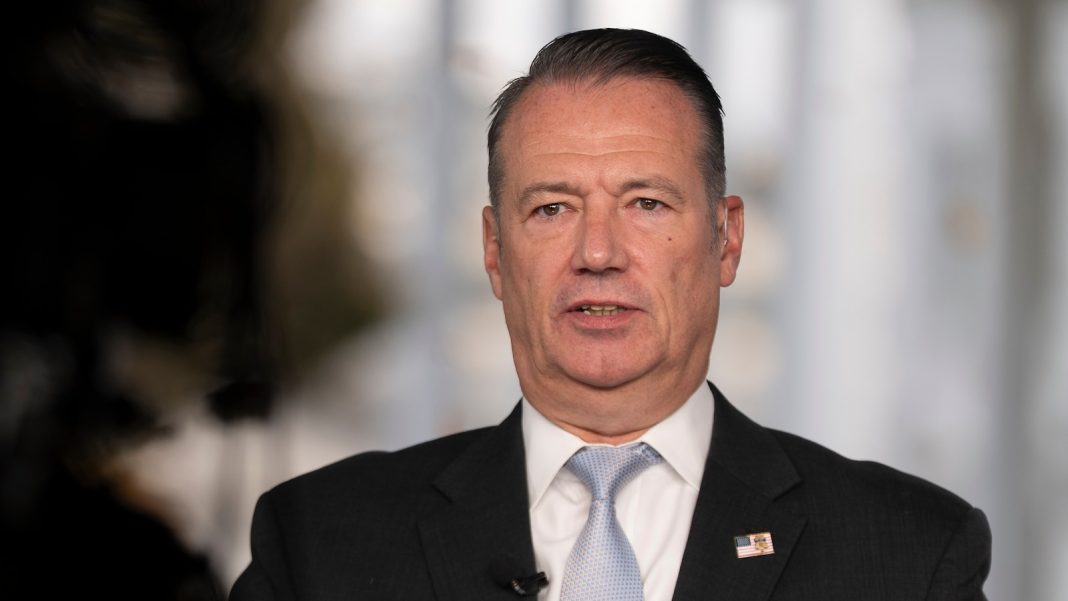


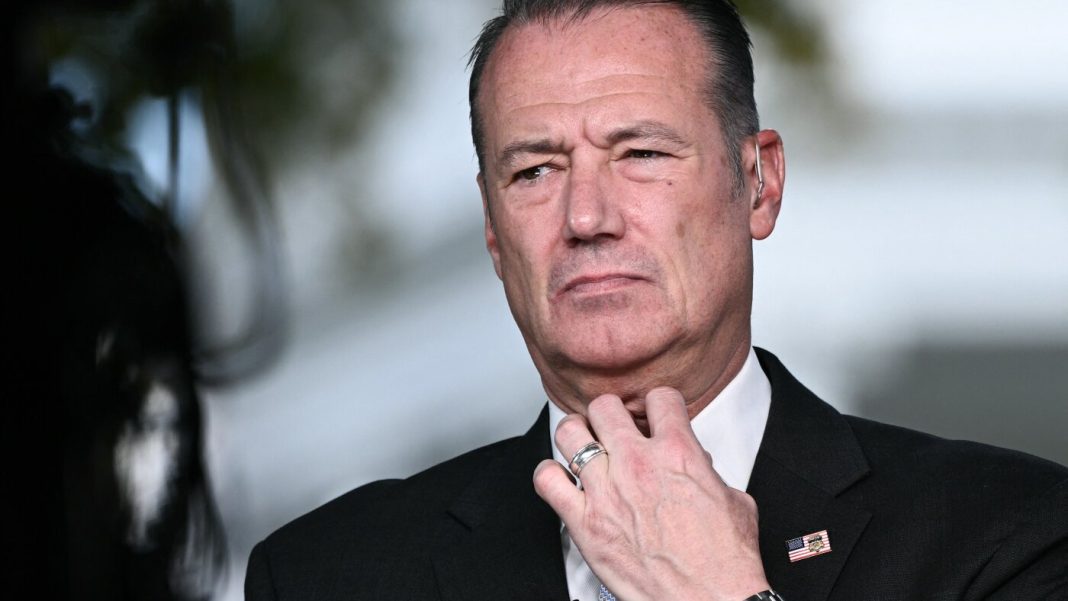
Todd Lyons, acting director of U.S. Immigration and Customs Enforcement (ICE), is seen here outside the White House on November 3, 2025. He will appear on Tuesday before the House Committee on Homeland Security.
BRENDAN SMIALOWSKI/AFP via Getty Images/AFP
hide caption
toggle caption
BRENDAN SMIALOWSKI/AFP via Getty Images/AFP
Top officials from three immigration government agencies are expected to testify before the House Homeland Security Committee, amid heightened calls for oversight of DHS and as lawmakers debate changes to the department ahead of a Friday funding deadline.
Immigrations and Customs Enforcement (ICE) acting director Todd Lyons, Customs and Border Protection Commissioner Rodney Scott, and U.S. Citizenship and Immigration Services Director Joseph Edlow will appear before the panel on Tuesday and return to Capitol Hill Thursday to testify before the Senate.
Watch the hearing, set for 10 a.m. ET Tuesday, live:
The hearing follows requests from Committee Chairman Andrew Garbarino, R-N.Y., in the aftermath of the killing of 37-year-old Alex Pretti, who was shot multiple times by federal immigration officers.
“Transparency and communication are needed to turn the temperature down,” Garbarino said in a statement announcing the hearing.
The hearings will be a balancing act for Republicans. The Congressional GOP majority broadly supports President Trump’s immigration enforcement actions, despite several voicing concerns in the aftermath of two fatal shootings in Minneapolis.
But the Trump administration’s immigration tactics have been scrutinized by the public. New polls show a majority of Americans say federal agents have “gone too far” in enforcing immigration laws.
DHS funding deadline approaches
The hearing is part of a broader focus on immigration this week. Lawmakers are considering potential changes to immigration enforcement operations at the behest of Democrats who refused to fund the agency without reforms.
Republicans sent Democrats an offer on a path forward on Monday, according to Democrats and a White House official. Details of that proposal were not publicly released and House Minority Leader Hakeem Jeffries, D-N.Y., and Senate Minority Leader Chuck Schumer, D-N.Y., quickly dismissed the offer.
“Republicans shared an outline of a counterproposal, which included neither details nor legislative text,” the two said in a statement. “The initial GOP response is both incomplete and insufficient in terms of addressing the concerns Americans have about ICE’s lawless conduct. Democrats await additional detail and text.”
Last week, Jeffries and Schumer, sent a letter to their GOP counterparts, outlining their proposals.
Some, like requiring officers to wear body cameras, have bipartisan support.
Last week, DHS Secretary Kristi Noem said the department is sending body cameras to every field officer in Minneapolis and that the body camera program would be expanded nationwide as funding allows. Democrats want this codified into law.
Other proposals face an uphill battle, including calls for officers to display identifying information on their uniforms, such as their last name, and to prohibit them from wearing face coverings.
Republicans have said banning face masks would make it easier for people to dox federal agents.
Jeffries said banning masks brings immigration enforcement officers in line with civil enforcement.
“We want to make sure that ICE agents are conducting themselves like every other law enforcement agency in the country,” Jeffries said on NPR’s Morning Edition. “Police officers don’t wear masks. County sheriffs don’t wear masks, and state troopers don’t wear masks.”
Democrats are also calling for a prohibition on the use of funds to conduct immigration enforcement near medical and child care facilities, schools, and churches. They want to see expanded training of agents, and the removal of officers from the field in the event of an incident until an investigation is conducted. They also want to require agents to verify that a person is not a U.S. citizen before holding them in immigration detention.
Additionally, Democrats want a mandate requiring immigration officers to only use warrants signed by a judge to make arrests. They say the current use of administrative warrants — written by DHS and not signed by a judge — could violate Fourth Amendment protections against unreasonable search and seizure.
Sen. Katie Britt, R-Ala., called Democrats’ proposals “a ridiculous Christmas list of demands” and said they were “not negotiating in good faith.”
If lawmakers don’t reach a deal this week, another stopgap bill to fund DHS in the short-term would be needed. Senate Majority Leader John Thune, R-S.D., told reporters on Monday that he hopes to begin work on a temporary funding bill on Tuesday, but said he is hopeful Congressional Democrats and the White House will find common ground and forge ahead with a deal.
Unlike past shutdowns, only DHS is at risk of closing its doors. A lapse in funding would affect agencies such as the Transportation Security Administration and Federal Emergency Management Agency — potentially affecting air travel and disaster response.
However, ICE would likely keep operating even if there is a shutdown. That’s because DHS got more than $70 billion in separate funds from Congress over the summer as part of a broader spending increase on border and immigration enforcement.
Both the Senate and the House are expected to be on recess next week for Presidents Day. If the DHS funding issue is not resolved, the Senate may need to stay in Washington to address any lapse.
NPR’s Ximena Bustillo contributed to this report.